

Vietnam Factory Production Delays: Why They Happen and How to Prevent Them

Viet Nam Candles

The Real Cost of a Late Shipment from Vietnam

A two-week production delay sounds manageable until you calculate the actual cost:

  • Freight rebooking fee — missing your vessel booking often means a fee plus a 1–2 week wait for the next available slot
  • Air freight premium — if the goods are urgently needed, air freight from Vietnam costs 4–6x ocean freight rates
  • Stockout at Amazon or retail — lost sales during the out-of-stock period, plus ranking damage on Amazon listings that takes weeks to recover
  • Downstream commitments broken — retail launch dates missed, promotional inventory unavailable, customer commitments broken
  • Cash flow disruption — goods paid for but not generating revenue while delayed in production

A two-week delay on a $30,000 order can create $5,000–$15,000 in downstream costs depending on the business model. The monitoring infrastructure that prevents it costs a fraction of that.

The 7 Most Common Causes of Vietnam Production Delays

1. Raw Material Shortage Discovered Too Late

The factory quotes you a lead time based on having materials in stock. They start production, then discover a component is backordered — a specific fragrance from their supplier, a glaze batch that did not pass QC, a rattan grade that is out of season. You find out when the delay has already happened, not when it became predictable.

Early warning sign: Week 1 visit confirms raw material inventory. If the full material quantity is not on-site at production start, the risk exists immediately.

2. Capacity Conflicts with Other Buyers' Orders

Vietnamese factories rarely work exclusively for one buyer. A factory that quoted you an 8-week lead time also accepted a large order from another buyer with an earlier deadline. Your order gets deprioritized. The factory manages this quietly until it becomes undeniable.

Early warning sign: Production floor is busier than expected on your product line. Output rate in weeks 2–3 is below what the schedule requires to meet the lead time.

3. Vietnamese Public Holidays — Particularly Tet

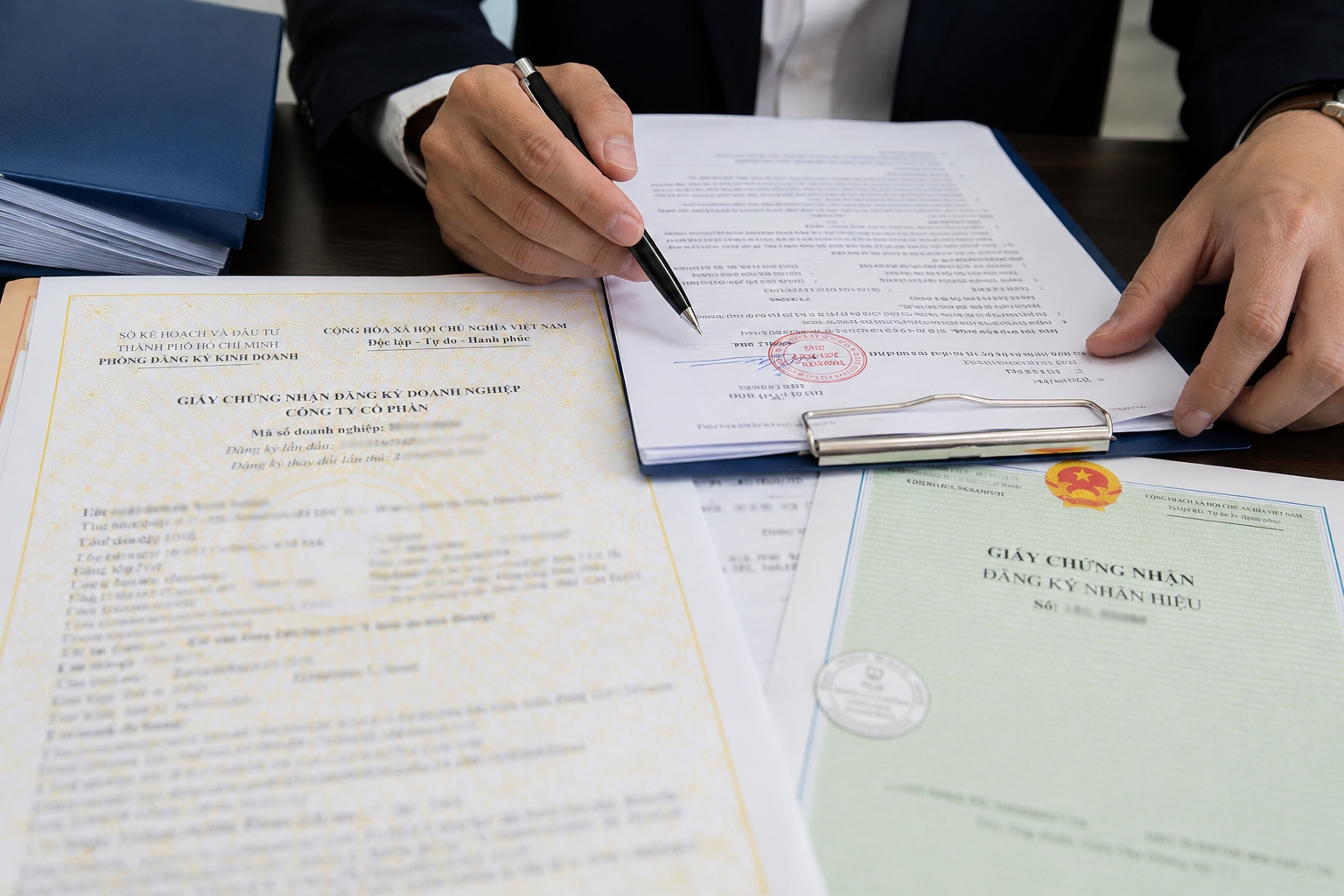
Vietnamese Lunar New Year (Tet) shuts factories for 1–2 weeks, often longer in practice as workers return to home provinces. Factories routinely underestimate the impact on production timelines when calculating lead times for orders that cross the holiday window.

Prevention: Confirm whether your production period crosses any Vietnamese public holidays when placing the order. Get the factory to confirm their shutdown dates and adjusted production schedule in writing before committing to a ship date.

4. Quality Failure Requiring Rework

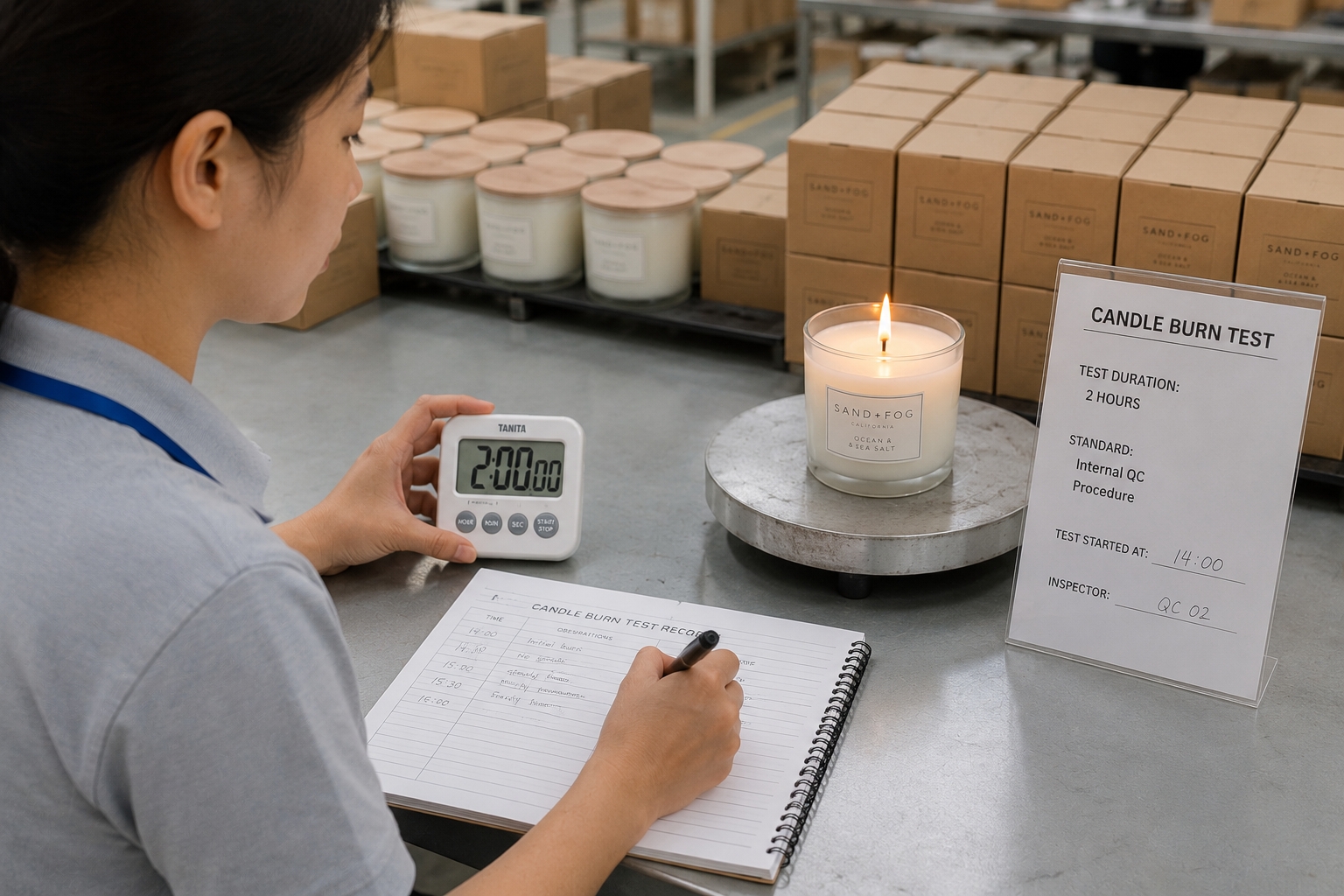
A batch of goods completes production only to fail the factory's own internal check — or an early quality visit by your representative. Rework takes time: sorting, fixing, repacking, and in some cases restarting a portion of the production run entirely.

Early warning sign: In-process quality check at the 30–40% production stage reveals issues. Catching a quality problem at 35% production allows rework of a manageable quantity. Catching it at 90% means almost the entire run needs attention.

5. Specification Misunderstanding Discovered Mid-Run

Your instructions said "natural cotton wick." The factory used "cotton-core wick with paper outer wrap" because that is what they had available and it seemed close enough. By the time you see production photos, 2,000 candles have the wrong wick. Rework or restart.

Prevention: Pre-production briefing conducted in Vietnamese by a local liaison, with all specification details confirmed in the factory's language. Approved sample physically present on the production floor throughout the run as the reference standard.

6. Workforce Availability Issues

Factory workers in Vietnam — particularly in seasonal woven goods production — are often from rural provinces. Unexpected circumstances cause workforce absences that the factory management absorbs without informing you, slowing output quietly for weeks.

Early warning sign: Weekly production floor visit shows fewer workers on your production line than in prior weeks. Output photos show less finished goods than the schedule would predict.

7. Poor Communication of Changes to the Factory

You sent an email asking for a change to the packaging label. The factory export sales team acknowledged it. The change was not communicated to the production floor. 4,000 units are packed with the wrong label. You find out at pre-shipment inspection.

Prevention: All specification changes during production are communicated in Vietnamese, in person, by your local liaison — not through email chains that stop at the sales office.

The Early Warning System: Weekly Factory Monitoring

Every cause of production delay listed above is detectable 3–4 weeks before it affects the ship date — if someone with your interests is physically monitoring the factory weekly. The monitoring system that catches these problems early:

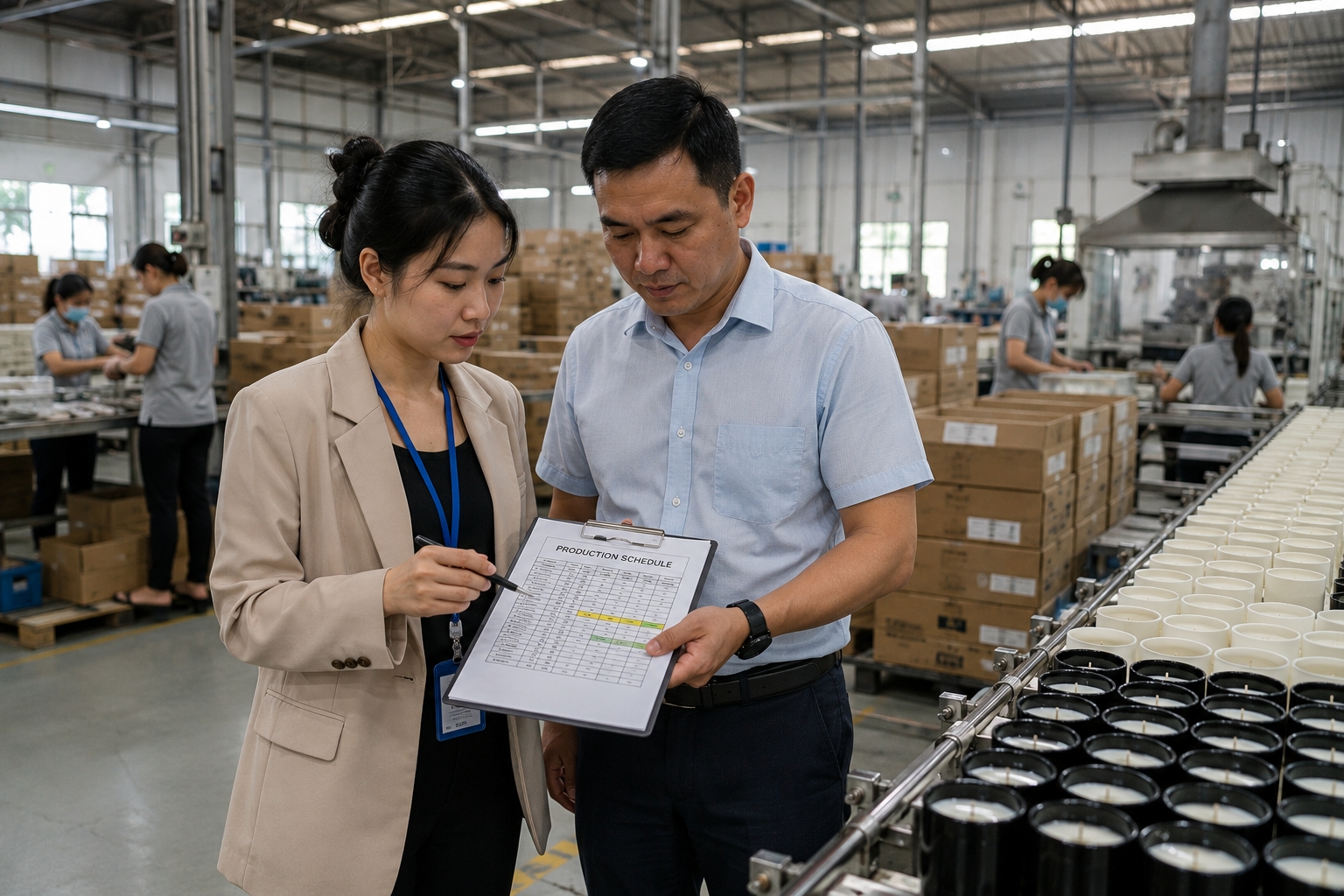
  • Week 1 visit: Raw material inventory confirmed on-site. Production schedule reviewed. Any immediate risks flagged.
  • Weekly production count: Output rate tracked week by week. If week 3 output is below the cumulative schedule target, an alert is raised immediately — not at week 7 when recovery is impossible.
  • In-process quality check: Production line quality observed at every visit. Issues are escalated to factory management that day in Vietnamese.
  • Specification change management: Any changes communicated to the production floor directly and confirmed as implemented.
  • Pre-holiday schedule adjustment: Holiday shutdown dates confirmed early and production schedule adjusted before the factory commits to an unachievable ship date.

What to Do When a Delay Is Already in Progress

If a production delay has already been identified, the priority sequence is:

  1. Assess the real extent — how many days/weeks behind is actual production vs. schedule? Get a confirmed number from a physical count, not a factory estimate.
  2. Identify whether recovery is possible — can overtime, weekend shifts, or additional workforce close the gap? Get a commitment from factory management in writing.
  3. Notify your freight forwarder immediately — do not wait until you are certain of the new date. Alert them to the risk so they can advise on vessel options and hold space provisionally.
  4. Calculate air freight option — if goods are time-critical, get an air freight quote immediately while ocean recovery is being explored. The cost may be justified to meet a retail or Amazon deadline.
  5. Document everything — if the delay breaches your purchase order terms, your documented factory monitoring reports are evidence of the timeline and the factory's commitments.

Our Production Liaison & Factory Monitoring service provides the weekly on-site presence that catches all seven delay causes early — before they become your freight problem. Combined with our pre-shipment QC inspection, you have full production-to-shipment coverage for candles, ceramic planters, woven baskets, and other home decor from Vietnam. Request a free consultation →

Also read: Vietnam Production Liaison: How to Manage Your Factory Without Being There | How to Manage Vietnam Factory Production Remotely

Featured news

Viet Nam Candles
img
WhatsApp
Zalo