

10 Red Flags When Sourcing from Vietnamese Factories — And How to Avoid Them

Viet Nam Candles

Why Red Flags Matter More Than Price

Every importer has heard a version of this story: buyer finds a supplier online with great photos and a price 30% below everyone else. Places an order. Pays the deposit. Then waits. And waits. The goods arrive months late, quality is unrecognizable from the sample, and the supplier goes quiet when the buyer complains.

The warning signs were there before the order was placed. This guide shows you what they look like — so you can see them in time.

Red Flag 1: Refuses to Share Business Registration Details

Every legitimate Vietnamese manufacturer has a business registration certificate and a tax code (Mã số thuế). These are public documents. A supplier that hesitates, delays, or refuses outright to share this information has something to hide — either the business is not properly registered, the scope does not cover manufacturing, or the entity placing your order is different from the entity you think you are dealing with.

What to do: Request the business registration number upfront. If they cannot provide it within 24 hours, move on.

Red Flag 2: No Physical Factory Address

Suppliers operating from a city or province name — "we are based in Ho Chi Minh City" — without a specific street address are a significant risk. A legitimate factory has a registered and verifiable physical address. Trading companies and middlemen often list a city because they do not have a production facility to point you to.

What to do: Ask for the full factory address and cross-reference it on Google Maps. Satellite view of the location should show an industrial building, not a residential area or commercial office block.

Red Flag 3: Pricing Significantly Below Market Average

Price is where many buyers get into trouble. If a supplier quotes you 30–40% below every other factory you have spoken to, one of three things is true: their quality is proportionally lower, they intend to substitute cheaper materials after your approval, or the quote is a hook to secure your deposit with no intention of delivering on those terms.

Candle, ceramic, and woven goods manufacturing have relatively fixed cost floors — raw materials, labor, energy, and export logistics. A price that defies these floors should trigger immediate skepticism, not excitement.

What to do: Get three to five quotes for the same specification. An outlier on the low end deserves more scrutiny, not a purchase order.

Red Flag 4: Pressure to Pay 100% Upfront

Standard international payment terms for new suppliers are 30% deposit before production and 70% balance after pre-shipment inspection. A supplier demanding full payment before production starts — especially from a first-time buyer with no established relationship — is operating outside normal practice and shifting all financial risk onto you.

What to do: Hold firm on 30/70 terms. Any supplier unwilling to accept these terms for a first order should not receive your business.

Red Flag 5: No Sample Process

A reputable factory welcomes the sample process. It protects both sides — the buyer gets to verify quality, the factory gets a clear, approved reference point for production. A supplier that pushes you to skip samples and go straight to bulk order has either no confidence in their quality or no intention of meeting your specifications at scale.

What to do: Always insist on a proto sample followed by a pre-production sample. No exceptions, regardless of how confident the supplier sounds.

Red Flag 6: Communication Gaps of Several Days

Slow or inconsistent communication before an order is placed almost always gets worse after. If a supplier takes three to five days to respond to a straightforward inquiry during the quoting stage, imagine how communication will look when you need answers about a production delay or a quality issue mid-order.

What to do: Set a clear communication expectation early. Professional suppliers respond within 24 hours during business days. Pattern of slow responses = pattern of slow problem resolution.

Red Flag 7: Produces "Everything"

A factory that claims to manufacture candles, furniture, electronics, garments, and industrial components simultaneously is almost certainly a trading company with a catalogue, not a manufacturer with a production line. Real factories specialize. Their equipment, workforce, and processes are organized around specific product categories.

What to do: Ask specifically: what percentage of your production is in this product category? What is the main product your factory produces? A real manufacturer answers these questions easily.

Red Flag 8: Stock Photos Used as Factory Evidence

If a supplier sends you photos of a pristine, magazine-quality production floor that looks unlike any real factory you have seen, reverse image search them. Trading companies frequently use stock photos or photos borrowed from real manufacturers to create a false impression of production capability.

What to do: Request a video call with a live walk-through of the actual production floor. Ask them to hold up a piece of paper with your company name written on it during the call — a simple but effective authentication step.

Red Flag 9: No References from International Buyers

A factory that has been exporting to international buyers for more than a year should be able to provide at least one or two references — companies you can contact to ask about their experience. Inability or unwillingness to provide any references suggests either a very short track record, a poor relationship history with previous buyers, or the factory is newer than they claim.

What to do: Ask for references early in the conversation. Contact them. One verified positive reference is worth more than ten polished product photos.

Red Flag 10: Showroom Visit Only, Production Floor Refused

This is perhaps the most important red flag of all. If a supplier invites you to their showroom, meeting room, or sample library — but declines or deflects when you ask to see the production floor — they are hiding the fact that there is no production floor to see. You are speaking with a trading company or a very small operation that subcontracts all production.

What to do: Make production floor access a non-negotiable condition of any factory visit. If they refuse, do not place an order regardless of how good their samples look.

The Fastest Way to Avoid All of These

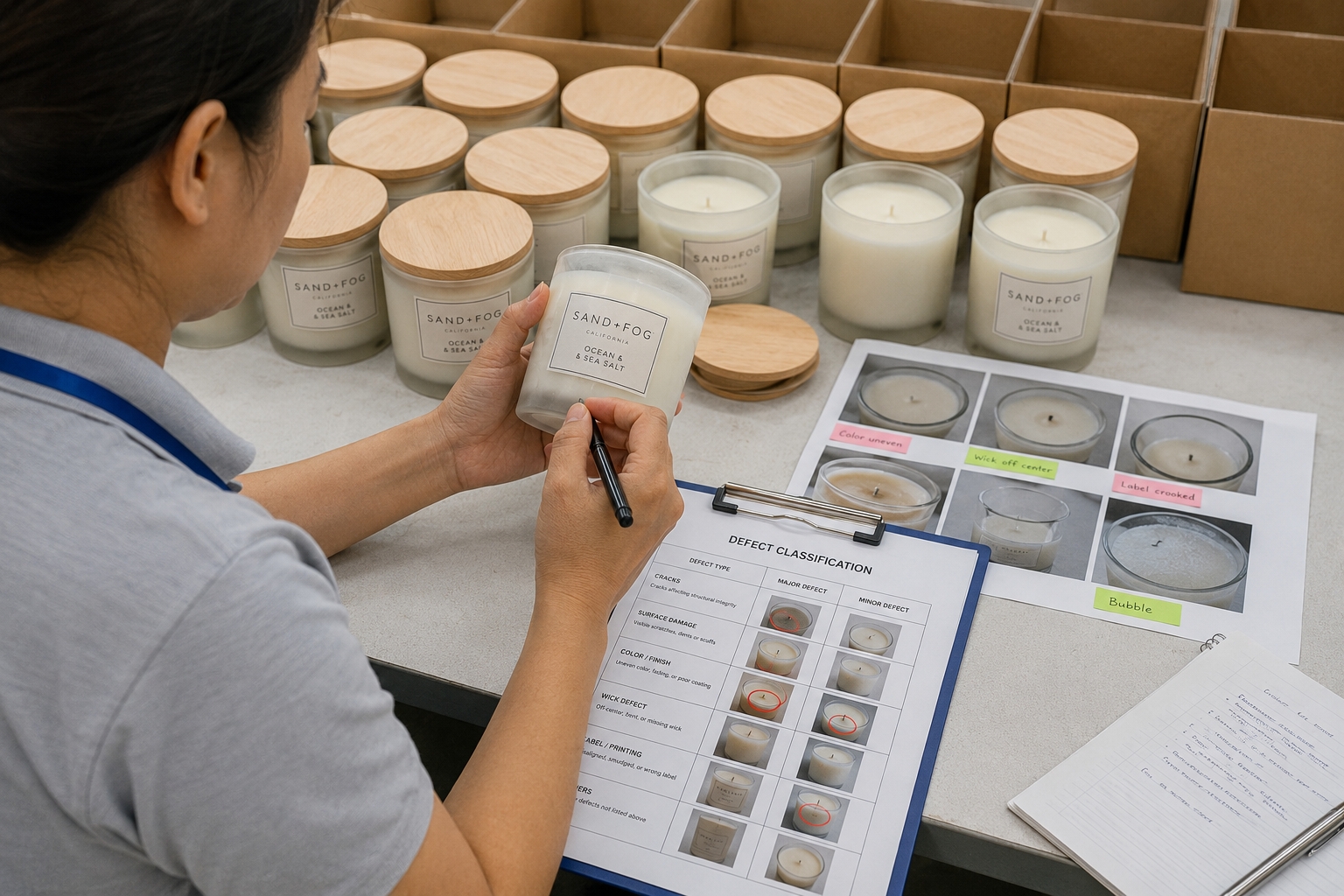
A local sourcing agent who visits factories regularly in Vietnam will identify all ten of these red flags on your behalf — before you have spent a dollar on samples or deposits. The cost of professional factory verification is a fraction of the cost of a bad order.

Our Factory Sourcing & Verification service checks all of the above, with a written report, photos, and a clear recommendation — so you can source from Vietnam with confidence.

Request a free consultation →

Also read: How to Find and Verify a Factory in Vietnam — Complete Guide | Vietnam Factory Audit Checklist

Featured news

Viet Nam Candles
img
WhatsApp
Zalo