
Vietnam Factory Audit Checklist: 20 Things to Verify Before You Place an Order

Viet Nam Candles

Why You Need a Factory Audit Checklist

Walking into a Vietnamese factory without a structured checklist is like interviewing a job candidate without any prepared questions. You will come away with a general feeling — positive or negative — but no reliable data on which to base a sourcing decision.

A proper factory audit checklist forces you to check the same things at every factory, in the same order, so you can compare them objectively. It also signals to factory management that you are a serious, professional buyer — which changes how they engage with you.

This checklist is organized into five sections. Print it, bring it with you, or share it with your local sourcing agent before every factory visit.

Section 1: Legal and Documentation Checks (5 items)

1. Business Registration Certificate

Request the factory's business registration certificate (Giấy chứng nhận đăng ký doanh nghiệp). Verify the company name, registration number, registered address, and business scope. The business scope must include manufacturing or exporting your product category.

2. Export License

Confirm the factory has an active export license. For specialized categories — chemicals in candles, food contact ceramics, natural fiber products — additional permits may be required.

3. Relevant Product Certifications

Depending on your destination market, confirm applicable certifications: CE marking (EU), REACH compliance, ASTM F2417 (candles, US), FSC (wood products), ISO 9001 (quality management), BSCI or Sedex (social compliance).

4. Tax Registration Number

The factory's tax code (Mã số thuế) should match its business registration. Cross-reference these to confirm the entity is consistent and legitimate.

5. Previous Audit Reports

Ask whether the factory has undergone any third-party audits — social compliance, quality, or environmental. A factory with clean audit history from recognized bodies (Bureau Veritas, SGS, Intertek) is a strong positive signal.

Section 2: Physical Factory Assessment (5 items)

6. Production Floor Access

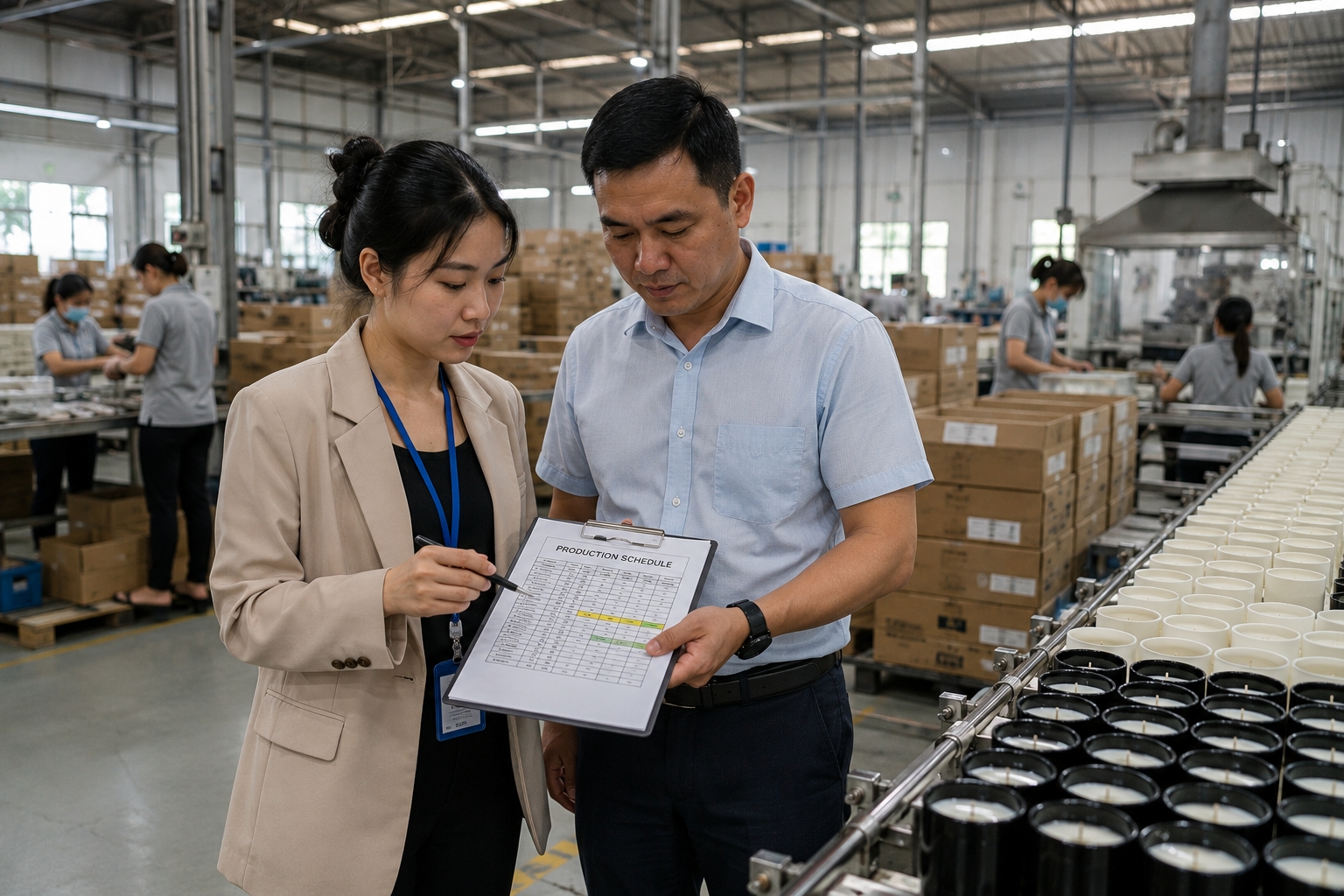
Insist on walking the actual production floor — not just the showroom or meeting room. If a factory refuses or redirects you, that is a serious red flag indicating they may be a trading company or have something to hide.

7. Workforce Headcount vs. Claimed Capacity

Count or estimate the number of workers on the floor during your visit. Compare this to the factory's claimed production capacity. A factory claiming 10,000 units per month with 15 workers on the floor has a credibility gap.

8. Equipment Condition

Observe whether production equipment is modern, well-maintained, and appropriate for your product. For candles, look for automated pouring and wick-centering equipment. For ceramics, assess kiln condition and temperature control systems.

9. Raw Material Storage

Check how raw materials are stored. They should be protected from moisture, sunlight, and contamination, clearly labeled, and batch-tracked. Poor storage directly causes quality inconsistency in the finished product.

10. Factory Cleanliness and Organization

A clean, organized production floor indicates quality discipline. Unorganized, cluttered spaces suggest poor management and are often correlated with higher defect rates.

Section 3: Quality Control System (4 items)

11. In-Process QC Checkpoints

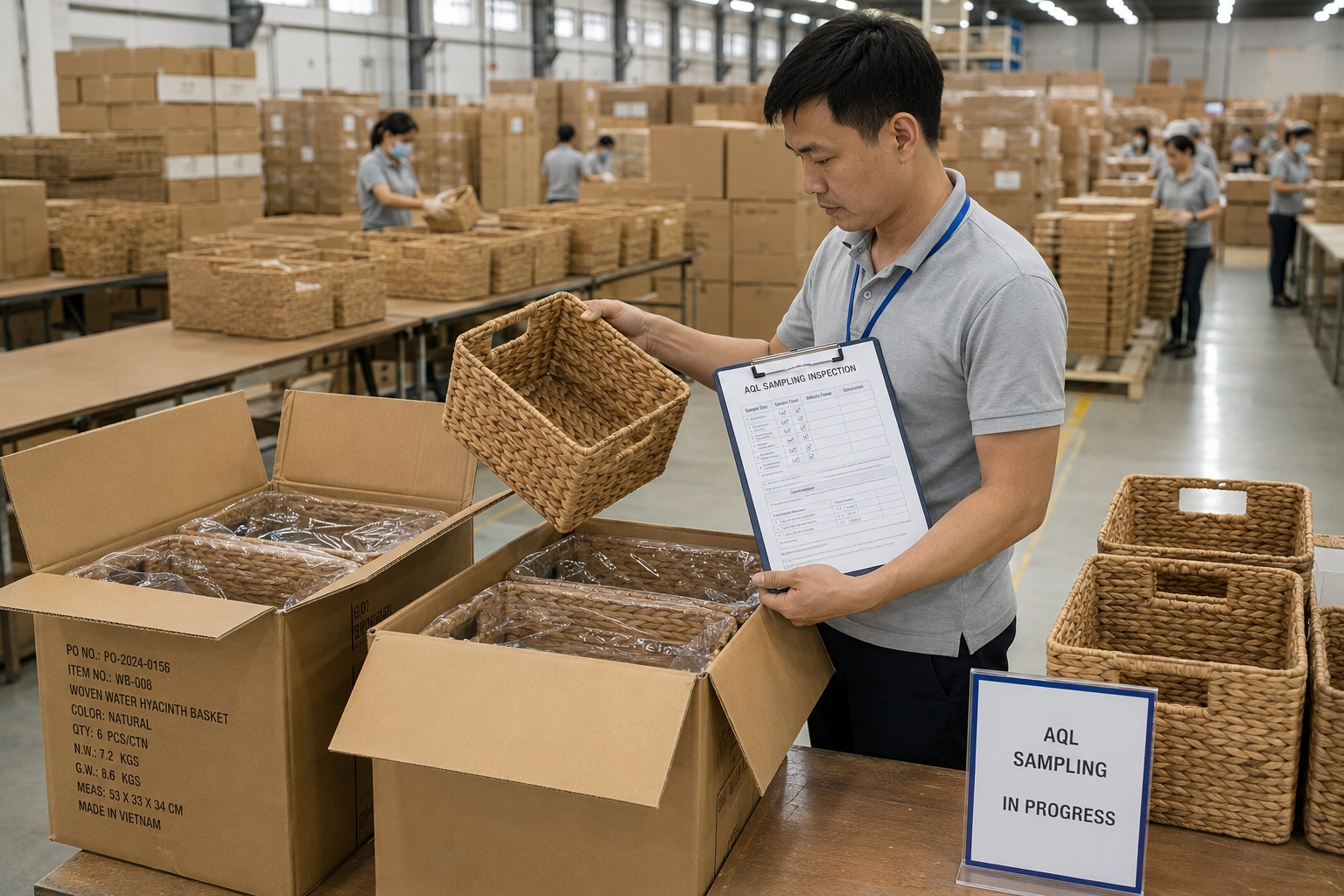
Ask where quality checks happen during — not just at the end of — production. Look for visible QC stations on the production line, not just a final inspection table at the packaging stage.

12. Dedicated QC Team

Does the factory have a separate QC team, or do line workers self-check their own output? Dedicated QC personnel produce more consistent results and demonstrate quality investment by factory management.

13. Defect Tracking

Ask to see defect rate data from recent production runs. A factory that tracks defects by type and line has the data discipline needed for continuous improvement. A factory that cannot tell you its defect rate is operating blind.

14. Sample Retention

Confirm the factory retains your approved pre-production sample throughout the production run. This is the reference standard for in-process and final inspection. If the sample is not kept accessible on the floor, production drift is likely.

Section 4: Capacity and Lead Time (3 items)

15. Current Order Book

Ask what other orders are currently running. A factory at 95% capacity has little buffer for your order and is at high risk of delays. A factory at 50–70% capacity can absorb your order without compromising lead times.

16. MOQ Flexibility

Confirm the actual minimum order quantity for your specific product — not a general MOQ. MOQs often differ by color, size, or material variant. Make sure the factory's MOQ is compatible with your business stage.

17. Lead Time Confirmation in Writing

Get lead time confirmed in writing — not verbally. Ask: "If I place the order today, what is the production completion date and the shipment date?" Both dates should be in your purchase order.

Section 5: Commercial and Ethics Checks (3 items)

18. References from International Buyers

Request contact details for two or three existing international clients. A legitimate factory with satisfied buyers will provide references readily. Reluctance or vague answers here are a significant warning sign.

19. Worker Conditions Observation

Observe working conditions on the floor. Workers should have appropriate safety equipment, reasonable working hours, and a non-coercive environment. If your retail partners or end customers require ethical sourcing, this check is not optional.

20. Payment Terms Willingness

A factory demanding 100% upfront payment before production, with no sample process and no references, is operating outside normal international trade practice. Standard terms are 30% deposit before production, 70% balance after pre-shipment inspection.

After the Audit: What to Do with Your Results

Score each factory against this checklist after your visit — not during it, as impressions can be misleading in the moment. Compare your shortlisted factories against each other on the same criteria, then:

  • Request samples from your top one or two factories
  • Commission a professional QC inspection before any bulk order
  • Start with a smaller initial order to test production consistency before scaling

Need help conducting a professional factory audit in Vietnam? Our Factory Sourcing & Verification service covers all 20 checks above, with a written report and photos delivered within 14 business days. Request a free consultation →

Also read: How to Find and Verify a Factory in Vietnam — Complete Guide

Featured news

Viet Nam Candles
img
WhatsApp
Zalo